

How does it work?
Qase reporters sit between your test framework and Qase. When your tests run, the reporter listens to your framework's events — test started, test passed, test failed — and sends the results to Qase in the background. You don't change how you write tests or how you run them.
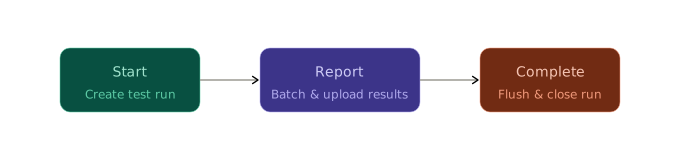
Here's what happens under the hood:
- Your tests start. The reporter creates a test run in Qase (or you can instruct it to report to an existing run).
- Tests execute. The reporter collects each result — pass, fail, skip — along with any metadata you've added: steps, attachments, fields.
- Results are sent in batches. While tests are still running, the reporter uploads results to Qase in the background. You don't wait until the end.
- Tests finish. The reporter sends any remaining results and completes the test run.
The reporter never interferes with your tests. If it can't reach Qase — bad token, network issue, API outage — your tests still run and finish normally. Reporting is non-blocking.
Reporters are available for all major test frameworks across JavaScript, Python, Java, C#, Go, Kotlin, and PHP. The setup is the same idea everywhere: install a package, point it at your Qase project, run your tests.
Updated 5 months ago
What’s Next
Did this page help you?